Reverse osmosis
Reverse osmosis filtration
Reverse osmosis filtration
For the cleanest water
- Even converts salt water into fresh water
- Modular construction
- High capacity
Water in its purest form through reverse osmosis
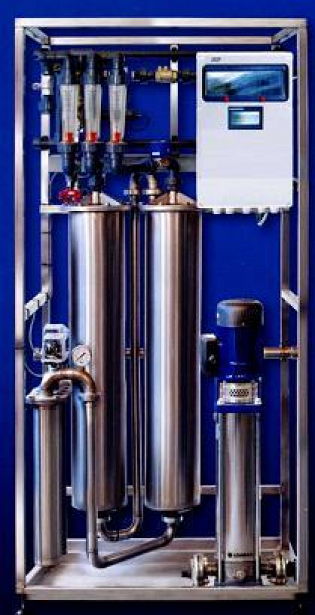
This filtration method removes even the smallest contaminants and particles through membranes. Since patented RO membranes became available, Holland Filter has produced RO systems to turn source water into pure drinking water.
RO systems are widely used in greenhouses, livestock farming, poultry and wherever very pure water is needed. Membranes remove contaminants including:
- Ammonium
- Bacteria and viruses
- Heavy metals
- Sodium, chlorine
- Limescale
- Nitrite, nitrate
- Sulphate
- Iron and manganese
- and others
How reverse osmosis works
How reverse osmosis works
Plants regulate their water balance through osmosis.
The cell wall has a thin membrane that passes only the smallest molecules, such as water molecules.
Larger molecules such as salt are retained by the membrane.
This property is called semi-permeability.
Naturally, the liquid becomes concentrated until pressure is equal on both sides of the membrane.
The influent
The influent
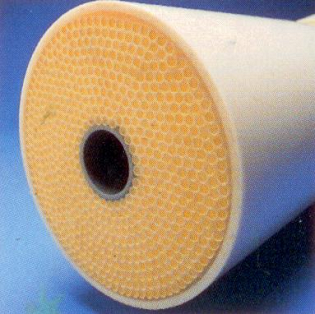
Incoming liquid remains inside the membrane and contains the contaminants as a concentrate at the end of filtration.
At the end of the cycle, this concentrated material can be discharged as filter waste or collected as a filtration product.

The effluent
The effluent
is the filtered liquid pressed through the membrane.
For water filtration, the membrane is usually made of polypropylene.
Water is pumped through the membrane at a high pressure of 10-16 bar.
High pressure pushes clean water with small molecules through the membrane while larger contaminants remain inside.
RO membrane materials
RO membrane materials
Water filtration
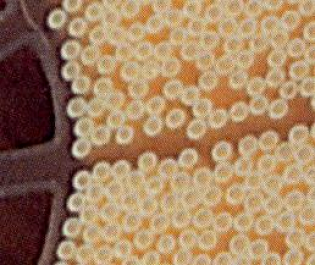
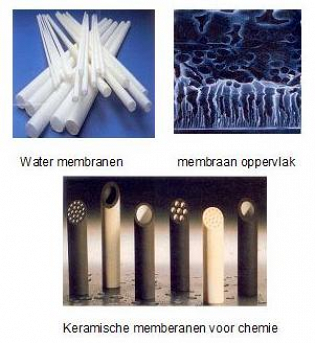
Salt-to-fresh-water filtration uses plastic membranes, often polypropylene.
Chemical filtration
For higher-pH liquids, ceramic membranes withstand higher pressures and temperatures.
Membrane housings
Membrane housings
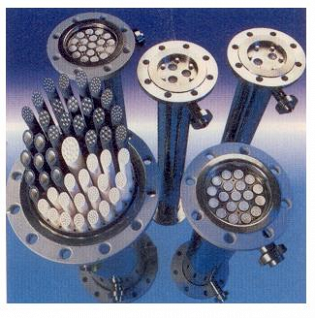
A housing often contains dozens to hundreds of small tubes and is made of plastic or stainless steel depending on the application.